


The Diana Print
by Anna Ruane
What makes a house a home? When you add your own touch to the place—your own furniture, maybe a fresh coat of paint, decor to the walls—you make it yours. That’s exactly what each owner of the Turner-Ingersoll mansion has done over the centuries. While we may not have written accounts of all the changes, the history has been left on the walls. For this month’s Collections Corner, we will be examining the Diana wallpaper in the mansion and the changes that have occurred in the parlor.
Thanks to the efforts of Caroline Emmerton and Joseph Chandler, many architectural features of the Turner-Ingersoll mansion were preserved during their 1908 restoration of the mansion. By the time Emmerton had purchased the mansion, its ownership had passed through nearly ten hands (several generations of Turners, several generations of Ingersolls, absentee creditors, and the Upton family). Analysis of the mansion has demonstrated numerous wallpaper and paint treatments that had been added over the years. Much of the papering was added by the Upton family, who resided in the mansion from 1883-1908.

Upton Family Parlor
Undated, House of the Seven Gables Photography Collection.
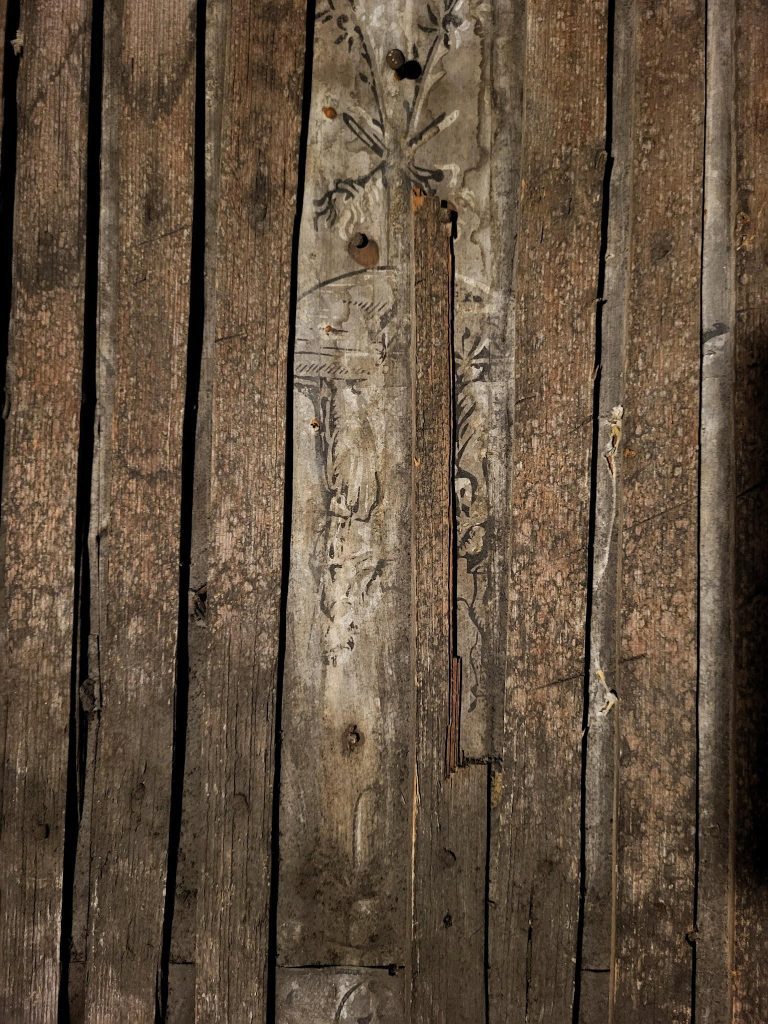
As with any old home, restoration is often needed to preserve the building. For Caroline Emmerton, the mansion was also used as on-site housing for the settlement workers. To create this space, she converted the original bed chamber, located above the dining room, into two bedrooms and added boards to a doorway between the bedrooms and the accounting room. Rather than purchase new materials, a partition was removed from the Accounting room (it had been added by one of the previous owners) and was repurposed as boards to seal the doorway. Other portions of the wall were stored in the attic for later examination.
House of the Seven Gables, Architectural Elements
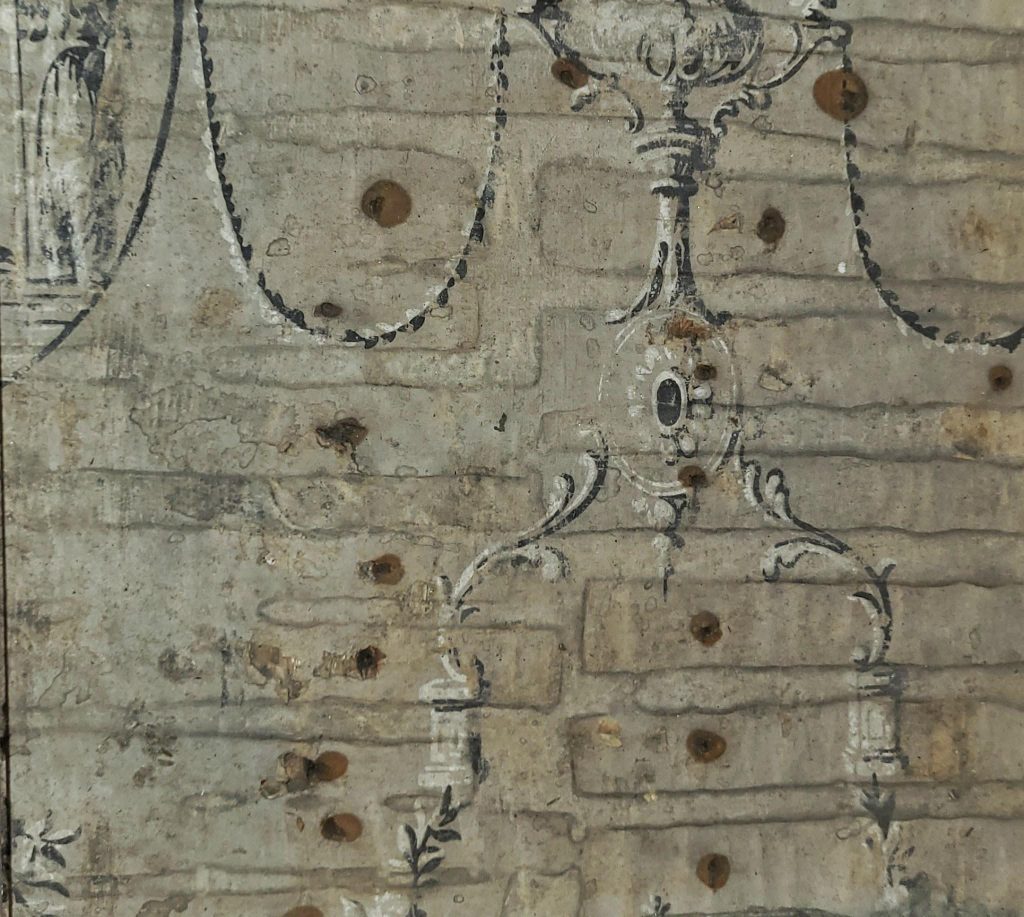
Boards with remnants of the original Diana wallpaper (1785-1790) and lathing, Images by Anna Ruane 2025.
Flash forward to 2016 when The Gables was restoring the Accounting room to focus on its original use; as an office or accounting room by the Turners. To get an accurate understanding of the space, the boards added by Emmerton and Chandler needed to be removed. Removal of the boards revealed a hidden treasure of the home: several layers of wallpaper! The bottom two layers were the oldest of the three, dating between 1785-1790.
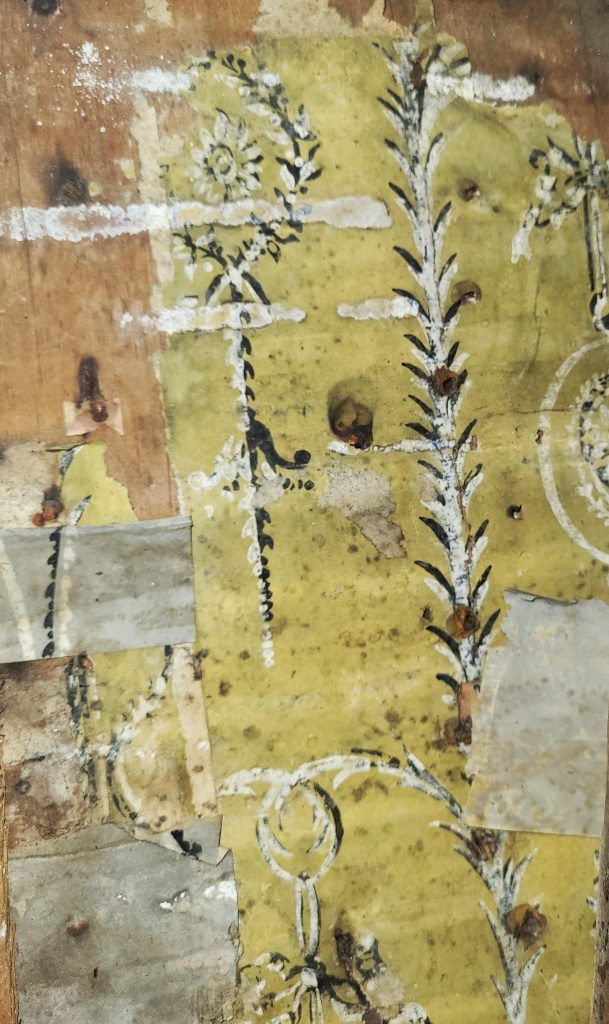
Diana wallpaper and Floral yellow wallpaper
House of the Seven Gables Architectural Elements. Image by Anna Ruane, 2025.
Given the dates of the wallpaper’s original production, it was very likely added by the Ingersoll family and is a product of early New England paper stainers. The job of a paper stainer could be tedious and required much skill. To produce wallpaper, the first step was to paint the sheet a solid base color. Once dry, details would be added. Rather than painstakingly hand create the designs, wood block prints were used, enabling the artists to quickly reproduce the same pattern. For each color of the print, a separate woodblock had to be carved, dipped in paint, and lined up with the previously applied print, leaving each layer to dry to avoid the colors blending. The work was not done there, though; the final step of the painting process included adding smaller details by hand.
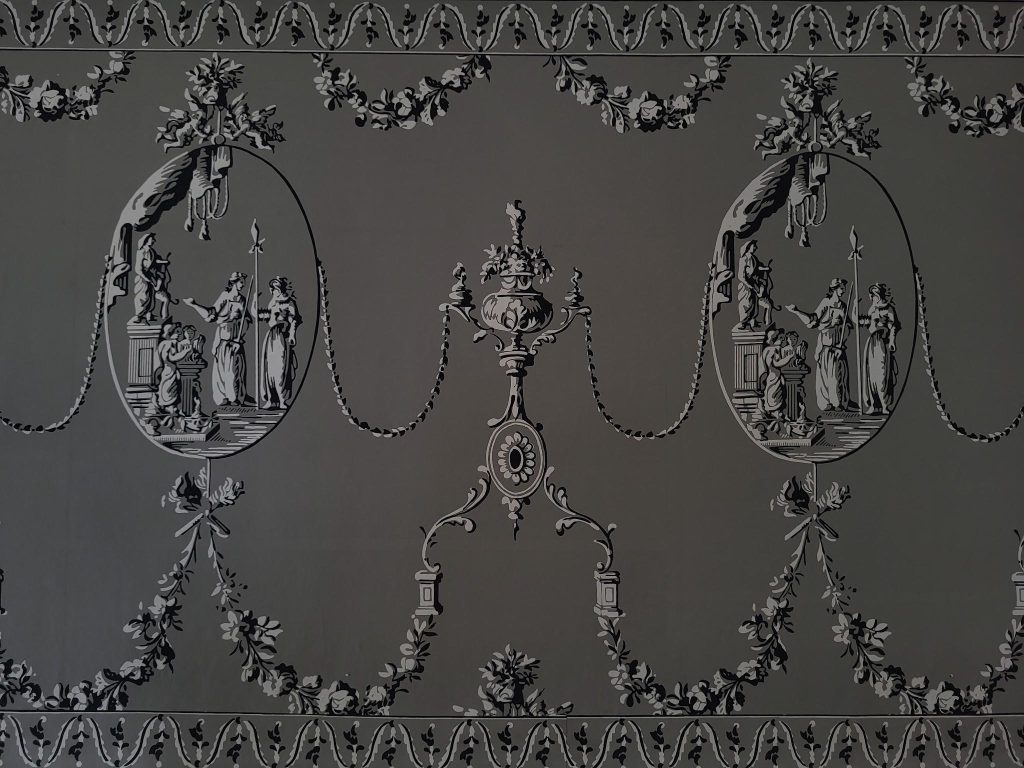
Diana Wallpaper
Turner-Ingersoll Mansion Accounting Room. Image by Anna Ruane, 2025.
After such an exciting discovery, the Diana wallpaper was elected to be restored to the Accounting room. The name of the wallpaper comes from the image of Diana, the Roman goddess of the hunt, who appears standing on a pedestal with one of her hunting dogs. She is surrounded by other robed female figures. Between each oval are floral swags to connect the images together. The wallpaper, just like the original, is paired with a floral border. Adelphi Paper Hangings in Sharon Springs, NY, reproduced the woodblocks and using the same techniques employed in the 18th century, created the Diana wallpaper print anew. For those wishing to use the print in their own homes, Adelphi Wallpaper Hangings, LLC. can make your dreams come true. Through their website, numerous historic wallpaper prints can be purchased, including the Diana print from The Gables.
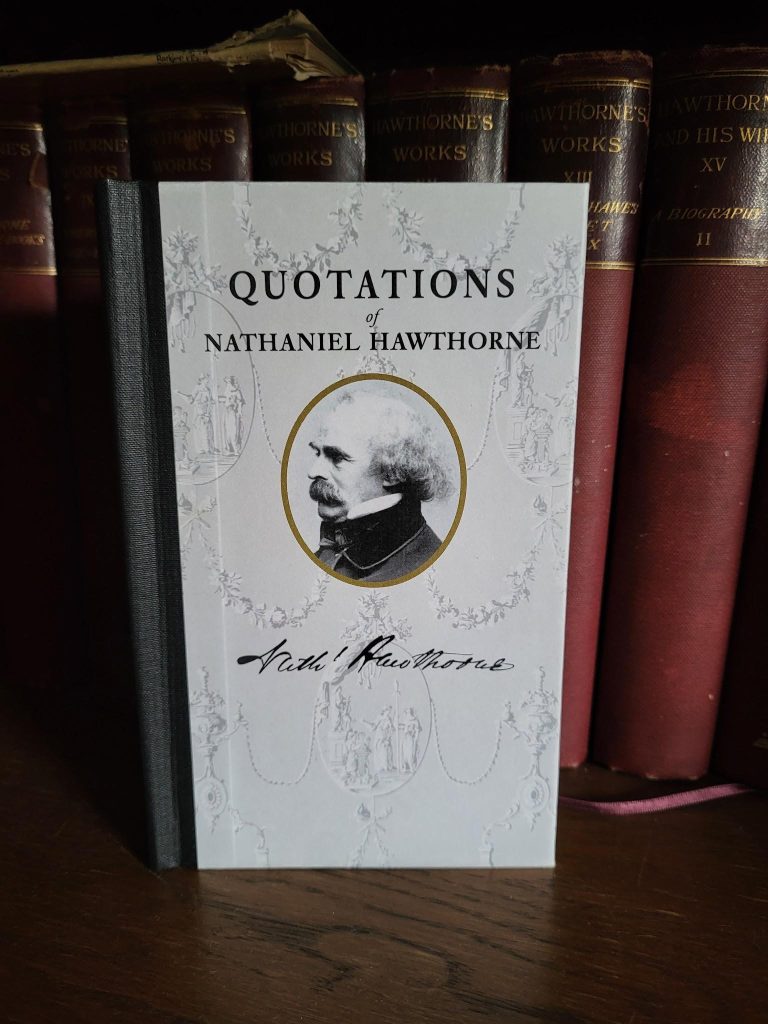
Quotations of Nathaniel Hawthorne
Sold in The House of the Seven Gables’ Museum Store.
To those of you who would like a smaller example of the Diana wallpaper, you’re in luck. Available in the Museum Store, the background on the cover of Quotations of Nathaniel Hawthorne matches the Accounting room wallpaper. Funnily enough, the Diana wallpaper has been tied to Nathaniel Hawthorne for a number of years. Along with the other restorations made in 1910, Emmerton elected to place the Diana wallpaper print in the parlor of the Turner-Ingersoll mansion. Replicated for her by John J. Morrow Inc., the pattern was originally referred to as the “Nathaniel Hawthorne,” likely due to the author’s association with the home. Ironically, this print is not exclusive to the Turner-Ingersoll mansion and has been discovered in several other houses throughout New England.

“Parlor House of Seven Gables, Salem, Mass.”
Caroline Emmerton, Circa 1910, House of the Seven Gables, Salem, MA.
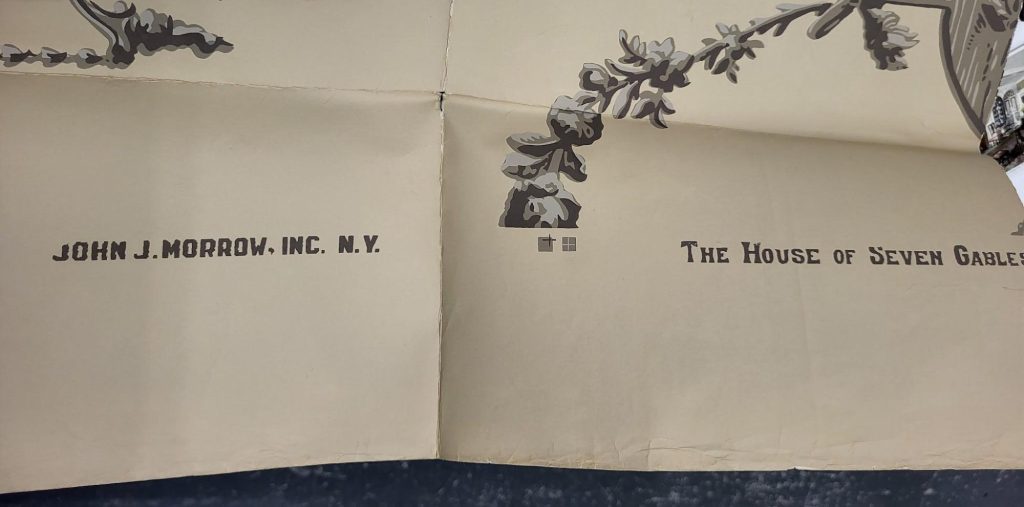
John J. Morrow. Inc. NY, Wallpaper sample
Circa Early 20th-Century, House of the Seven Gables, Salem, MA
The Diana print wallpaper remained in the parlor for a number of years. In 2004, The Gables examined parlor interpretations in other New England merchants’ houses who were active during Captain John Turner’s time. One discovery was the use of elaborate wallpapers, such as the circa 1720 wallpaper found in the John Whipple home in Ipswich, Massachusetts. The decision was made to replace the Diana paper with the bright and colorful Whipple paper, known as Carnation and Shells. Blue, pink, and yellow flowers with green leaves adorned the walls of the room and a matching green ‘verdigris’ paint was selected for the wooden panelings.
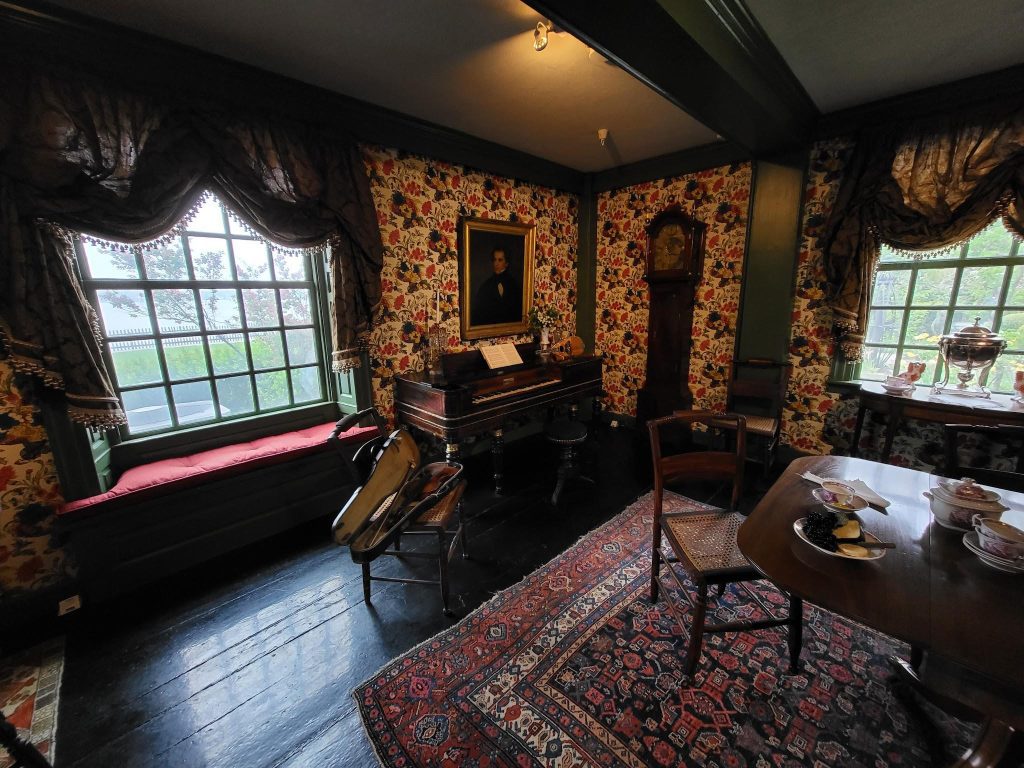
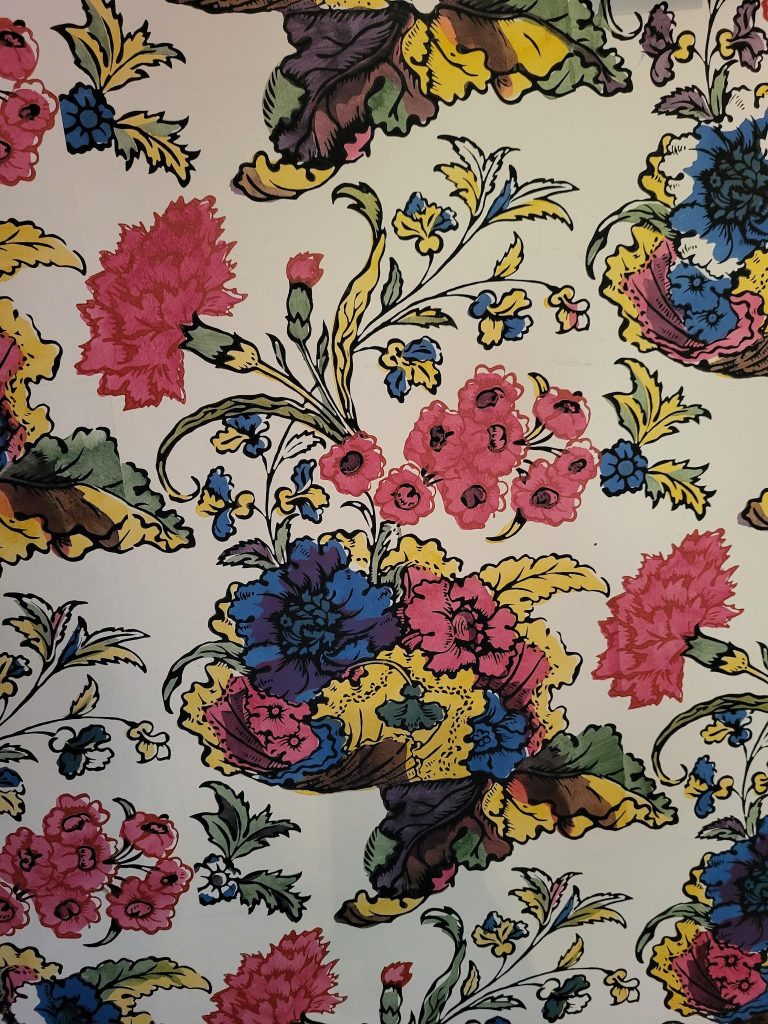
Turner-Ingersoll Mansion, Carnation and Shells Wallpaper
Images by Anna Ruane 2025
Over twenty years have passed since the Carnation and Shells wallpaper was added to the Parlor. In that time, the interpretation of the mansion has shifted again. While the Turners were the ones who had the mansion constructed, it has been lived in by numerous individuals over the years with eventful lives of their own. The Parlor is now closely tied with Susannah Ingersoll, older cousin to Nathaniel Hawthorne. From letters from and about Susannah, it is obvious that the single woman was quite a social lady, holding dinners and card games at her home. What room would be better for hosting guests than the large, stylish and high-ceilinged parlor?
While The Gables is closed this month, we’re excited to share the changes happening behind the scenes! New paint treatments and wallpaper are being added to the Great Chamber and Dining Room, and the Parlor is also getting a beautiful update. The Parlor will now reflect Susannah’s time in the home, featuring yellow-cream paint—a popular color of the era—and a stunning brown and cream floral-patterned wallpaper. While we’ll miss the Carnation and Shell wallpaper, the new design offers a more authentic glimpse into what an 1840s parlor looked like. We hope you’ll join us when we reopen for tours on February 14, 2026, and experience the transformation through Susannah’s eyes.
Interested in seeing what other exports our collection holds? Visit our Online Collections to view more!